
One of the most ubiquitous political buzzwords over the last few months is “affordability,” a seemingly innocuous concept that has taken on a life of its own. When it comes to the rising costs of utility bills, particularly gas and electricity, affordability has even transformed into a successful political strategy. Recently, winning candidates in several states—including Georgia, New Jersey, and Virginia—have vowed to tackle rising energy costs as part of a broad platform of reducing living expenses. This is a message that anyone who pays for gas or electricity can appreciate. After all, energy costs have left most Americans turning their pockets inside out.
According to the National Energy Assistance Directors Association, one in six families is in arrears on their utility bills, and household utility debt rose to $25 billion in 2025, from $23 billion in 2024. Given that cost-of-living expenses are also soaring, higher utility bills threaten the stability of lower-and-middle-class families nationally.
The average residential utility bill was 30% higher last year than it was in 2021. That grim situation promises to worsen. As the war in Iran progresses—and instability spreads in the Middle East—energy costs are sure to rise further—and this probability goes beyond the gas pump. “Since more than 40 percent of American electricity is generated from natural gas; that means electric bills are also affected by these fluctuations,” writes Kiley Bense of Inside Climate News. “This is especially true in states that rely more on this fuel for power, like Pennsylvania, Delaware, Mississippi, Florida and Louisiana.”
Among the many reasons for skyrocketing energy costs is the rapid development of data centers across the country. These structures, built to accommodate complex technological systems for AI, consume massive amounts of electricity. Like the theme of affordability, data centers have recently become political flashpoints. In Pennsylvania, Gov. Josh Shapiro, despite his recent alliances with the tech sector, recently criticized data centers for their omnivorous energy demands, which drive up utility costs for residents across the state. “Pay for your own power, so it’s not saddling local businesses or homeowners with higher costs,” he told Politico.
The rapid growth of data centers also puts a strain on the ability to deliver energy. “Part of the problem is that you can often build new data centers faster than you can build new power plants to supply them,” said Geoffrey Blanford, of the Electric Power Research Institute. “And that bottleneck can really drive up costs in the short term.”
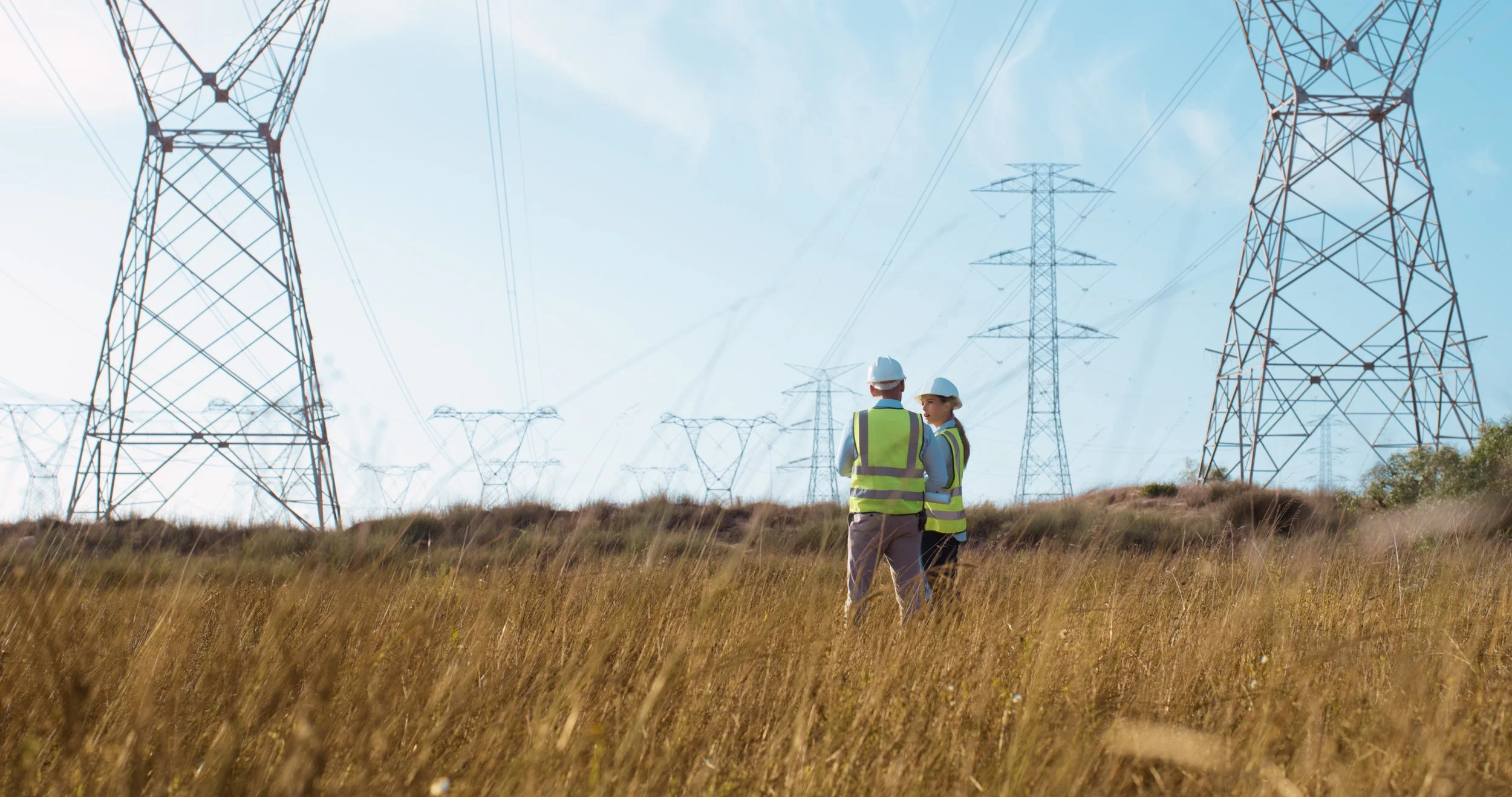
Other reasons for higher fuel and energy costs include inflation, lower supplies of natural gas due to increased exportation, infrastructure repairs, and weatherization upgrades to existing equipment. “Our grid is getting old,” said Charles Hua, executive director of PowerLines, a non-profit organization focused on energy. “We’re not using it efficiently, so it costs a lot of money just to replace and repair and modernize our grid infrastructure."
Weatherization highlights a critical issue. Unexpected cold snaps, such as the one that gripped the East Coast last month, and long-lasting heat waves, which seemingly hit the country every summer, have unexpected economic consequences for utilities. One of the keys to minimizing utility costs associated with extreme weather events is futureproofing. Designing with futureproofing in mind essentially means anticipating evolving climate patterns and economic fluctuations and mitigating their impact down the line. High-performance buildings combine sustainability and indoor air quality with resilience and thermal comfort, two important bulwarks against rising utility costs.
A recent Studio St. Germain project, the Wilkinsburg Residence, is a model of energy efficiency and a potential case study in how to check runaway costs. As the first single-family home in Pennsylvania to earn an EnerPHit certification, the Wilkinsburg Residence boasts an airtight envelope, thermal insulation, and triple-glazed windows. These elements combine to produce an EUI (Energy Use Intensity) of 16, which is 80% less than the established baseline figure. Designed to maximize natural light, the Wilkinsburg Residence also reduces electrical use—simply by virtue of its planning.
High-performance design, a Studio St. Germain specialty, fuses the Passive House principles found in the Wilkinsburg Residence with sustainability, health, and productivity. Part of its importance as an economic investment lies in its use of resilient materials for thermal resistance, which lessens lifecycle maintenance requirements. Not only does high-performance design minimize the impact of extreme weather events, but it also promises stability with respect to financial unpredictability. While homeowners and prospective homebuyers continue to grapple with sticker shock, stiff mortgage rates, and a supply shortage, they are also faced with burdensome day-to-day expenses from unchecked operational costs.
With the increasing costs of materials and labor in the construction industry, a Passive House stands out as a potential cost-effective option in the long run. Its design focuses on minimizing energy consumption by preventing heat loss, drafts, and thermal bridges. This means that a building requires much less energy for heating and cooling, resulting in lower utility bills compared to conventional building. Because a passive house is designed for optimal temperature control, the reliance on air conditioning and heat is significantly reduced. Although a high-performance building costs more than standard construction, the money saved on energy costs helps to balance out the initial investment in quality design and materials.
If current energy trends continue, a high-performance residence may become a necessity in the future, a future whose economic outlook promises continued volatility.