
In an increasingly fractious political climate, there seems to be one overriding exception for general agreement in the United States: opposition to data centers. Grass roots campaigns from Genesee County in New York to Monterey, California—and dozens of stops in between—have made it clear that the rapid construction of data centers is a widespread concern.
Indeed, with bipartisan anger boiling over at the influx of data centers in community after community, politicians of all persuasions have jumped into the fray. In New York, Gov.Kathy Hochul signed the first moratorium on data centers. Similar ideas are being bounced around in legislatures across the country. Even a laissez-faire state such as Texas—as pro-business as they come and a Shangri-La for Big Tech firms—has ramped up regulations. In Pennsylvania, Governor Shapiro recently signed a sweeping executive order imposing stricter standards on data center developments.
There are three main elements that drive concern about data centers: electricity (and its effect on utility bills), environmental impact, and water usage.
Data centers are oversized warehouses that store servers for everything from e-commerce to bitcoin mining, to cloud computing, and, in recent years, AI systems. These data centers must keep their perpetually working servers from overheating, and these operations require enormous amounts of energy.
According to Business Insider, data centers may account for up to 12% of all electricity usage in the United States by 2028, an unprecedented surge in demand. As a result, grids, which are already aging, will be pushed to their limits in the future. As the Washington Post recently noted, “Conventional data centers historically required electricity measured in tens of megawatts. Today, the largest AI campuses are being planned in gigawatts, creating loads comparable to entire cities.”
Those gigawatts have to come from somewhere, and developers have begun operating on a Bring Your Own Power Plant basis, bypassing municipal grids and repurposing dormant gas works and foundries for power. Because overtaxing the grid is a real possibility, and because connecting to the grid sometimes has a waiting list of years, developers have been increasingly relying on this “behind-the-meter” strategy. And that means using coal, gas, and oil for power.
Locally, the most notable project involving a decommissioned site is Homer City, formerly the largest coal-burning power plant in Pennsylvania. Soon, Homer City, located in Indiana County, will become a 3,200-acre campus, with Amazon eyeing it for possible future use. Similarly, Three Mile Island, whose nuclear meltdown in 1979 made it a notorious catchword, will also be used as a data center for Microsoft.
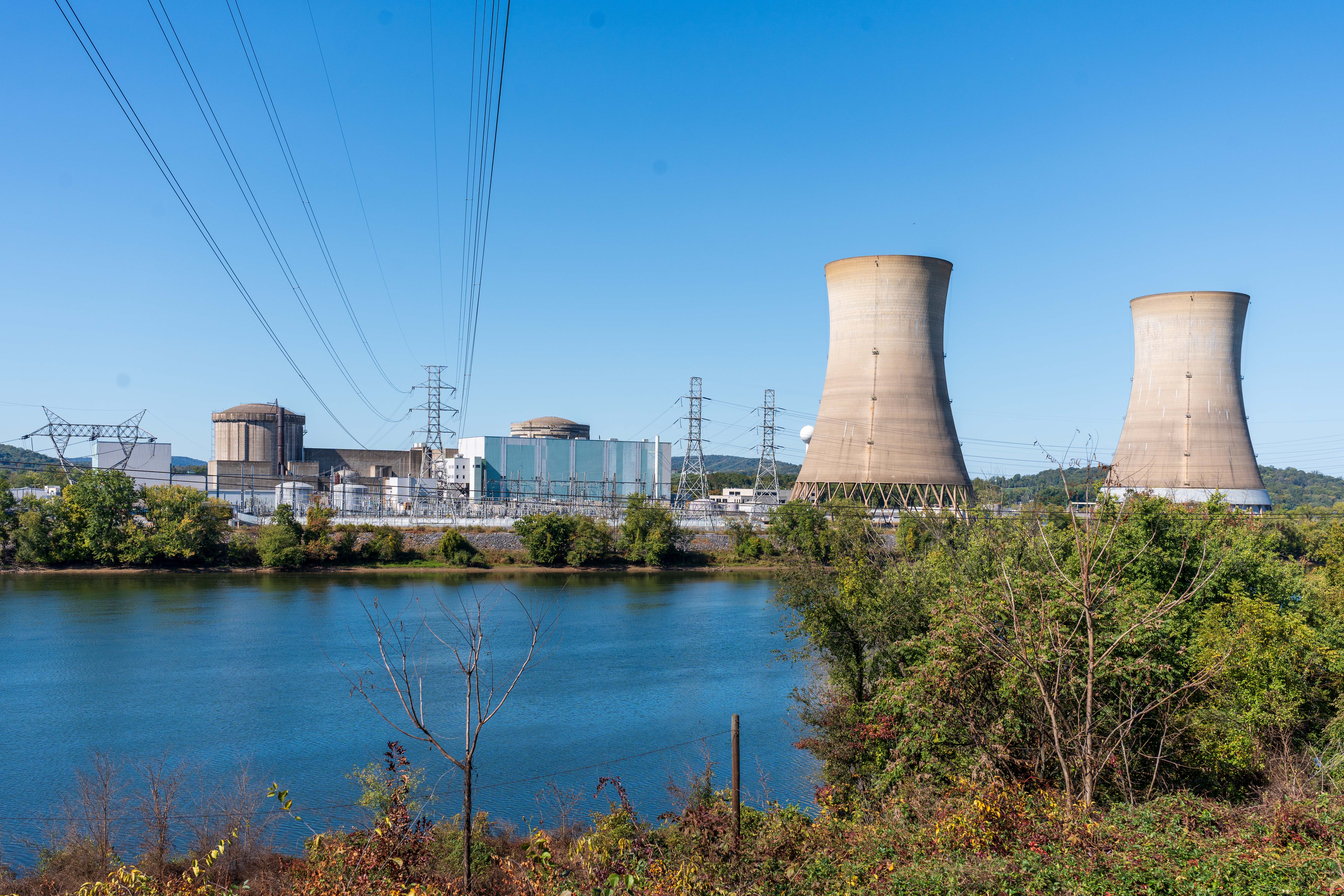
Renovating dormant plants to deliver power to data centers may have its shortcomings, but, ultimately, it is an exercise in adaptive reuse and at least cuts down on embodied carbon when compared with the prospect of new construction. Retrofitting these existing structures also reclaims brownfields, preserves materials, prevents stress on municipal grids, and alleviates the often-contentious issue of land usage.
Pennsylvania is second only to Texas in producing natural gas (which makes the Keystone a hot spot for data centers), but it also has the unusual distinction of having the most abandoned coal mines in the United States. And the idea to build data centers in these polluted eyesores has also started to gain momentum. In 2013, Iron Mountain, in Boyers, re-purposed an abandoned limestone mine for a data center that sits 220 feet below ground level. In addition to repurposing unused land, Iron Mountain also avoids the touchy water issue by recycling the water from an underground lake. As a proof-of-concept, Iron Mountain highlights the possibilities of mitigating resource use as well as noise pollution and greenhouse gas emissions. According to Inside Climate News, several other abandoned mines will be repurposed for data centers, including the Robena Mine, the Consol Mine, and possibly a former mine in Northeastern Pennsylvania named Morea.
One of the most contentious issues surrounding data centers is water usage, particularly in areas already grappling with scarcity. In 2023, Google alone reported using a net 6.1 billion gallons of water for its data centers—and that was a few years before the current AI infrastructure frenzy.
In some ways, water is a perpetual Catch-22 for data centers, which primarily use a pair of methods to cool their massive servers. Evaporative cooling is, by itself, water-intensive, but its alternative, mechanical air cooling, uses far more electricity, which not only threatens to overwhelm local grids but also requires water to generate. But there are also solutions, however imperfect, to mitigate consumption. Replacing the predominant method of cooling servers with closed-loop systems, for instance, will reduce water-usage.
Only a small percentage of data centers currently use this method, but its expansion, despite being more expensive and time-consuming to implement, can only be considered a step forward in conserving natural resources. Closed-loop systems, which essentially recirculate water for cooling purposes, save on water but require far more energy than the widespread evaporative process. That tradeoff means burning more fossil fuels, producing more carbon emissions, and taxing the grid to its limits. But if architects and developers can work to reduce energy consumption—e.g. through the behind-the-meter strategy—they can offset, to an extent, the drawbacks of using closed-loop systems.
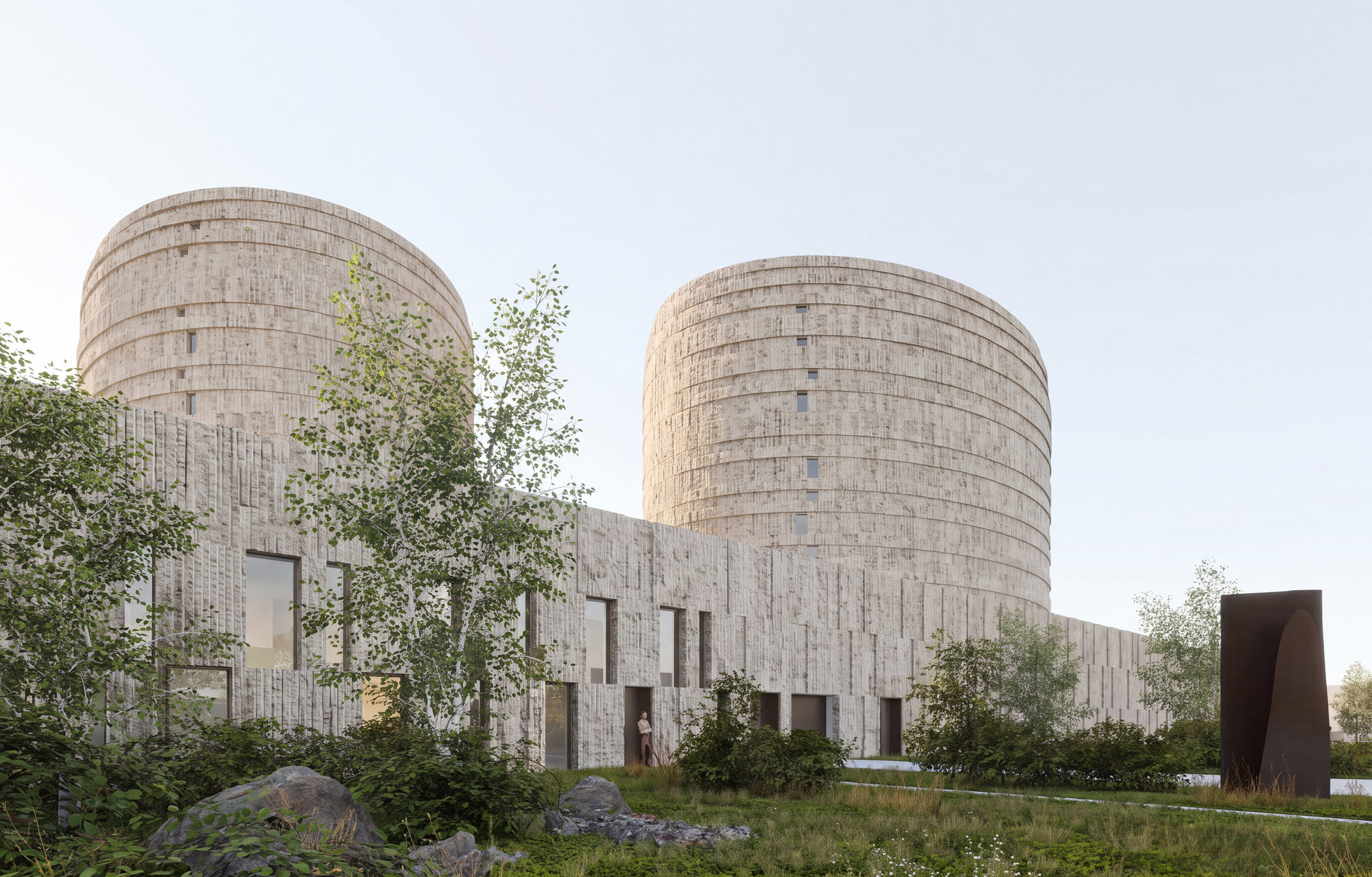
Other possible solutions to the environmental impact of data centers include reducing embodied carbon by using sustainable materials, such as stone, mass timber, or low-carbon concrete. In Sweden, Carl Fredrik Svenstedt Architects has designed the Stone Cloud, a data center that uses standardized structural granite panels. "The aim is to lower the carbon footprint of data centers through smarter, sustainable buildings that last, that can be converted or eventually recycled," studio founder Carl Fredrik Svenstedt told Dezeen.
Conserving energy and water, as well as reducing emissions, will benefit Big Tech companies in the long run. After all, the threat of moratoriums, lawsuits, and protests should be enough motivation for them to act. To do that, they will invariably have to consult architects on minimizing environmental and energy impact.
A firm such as Gensler, for example, which is committed to responsible design, is limited somewhat in producing data centers with meaningful effect, partly because of the demands of developers and partly because of the rush to fast-track centers in operation. But it is the nature of the operational imperatives of data centers that is most difficult to overcome. "Until the physics of electricity and computing change, the infrastructure inside is always going to be resource-intensive," said Geofrey Diamond, design director at Gensler. "That's just the reality of critical infrastructure. Power plants, water treatment facilities, hospitals, data centers—these are energy-intensive by necessity, and for now, our job as architects is to mitigate that intensity asaggressively as we can through the building components we have control over.”
Want to keep up with the latest?
Sign up to receive our Ideas newsletter